Switzerland · Mountains
Lake Lucerne
Rigi and Pilatus
The two balconies above Lake Lucerne, by cogwheel railway and cable car.
Lake Lucerne
Rigi and Pilatus
The two balconies above Lake Lucerne, by cogwheel railway and cable car.
Rigi and Pilatus are the two balconies of Lake Lucerne, one on each side of the water, and each offers a different idea of the mountains. They can be climbed in a single day, but each deserves its own.
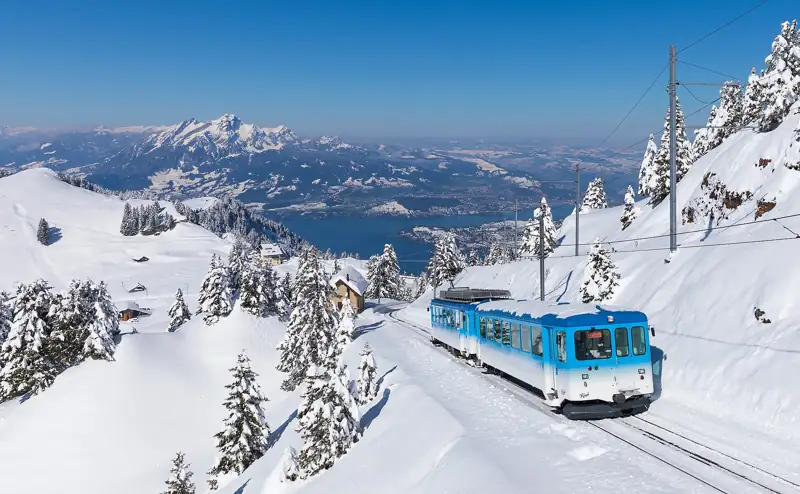
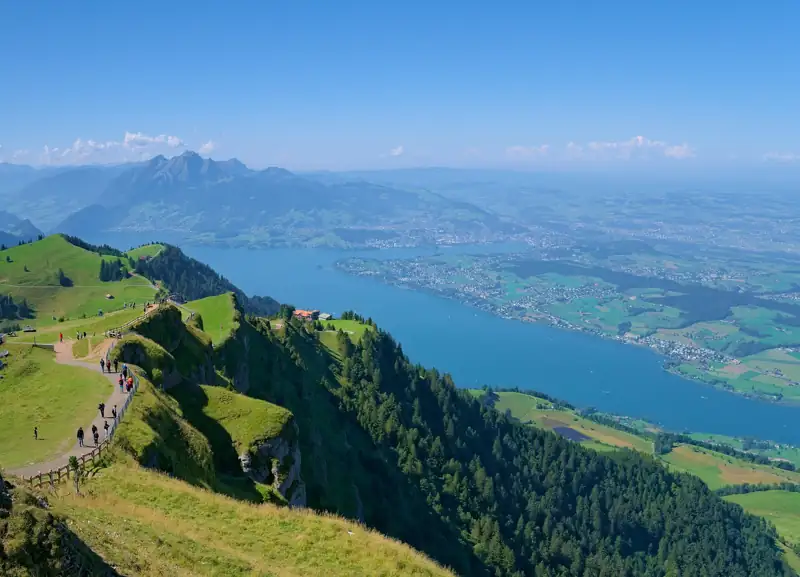
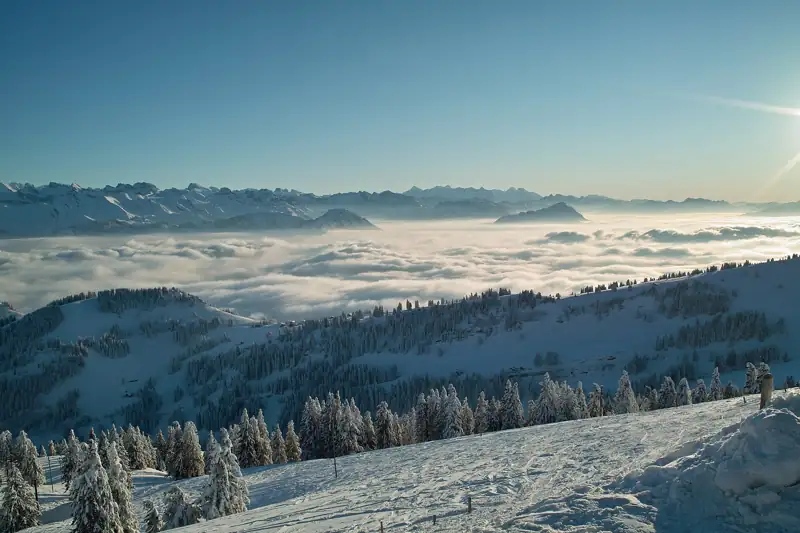
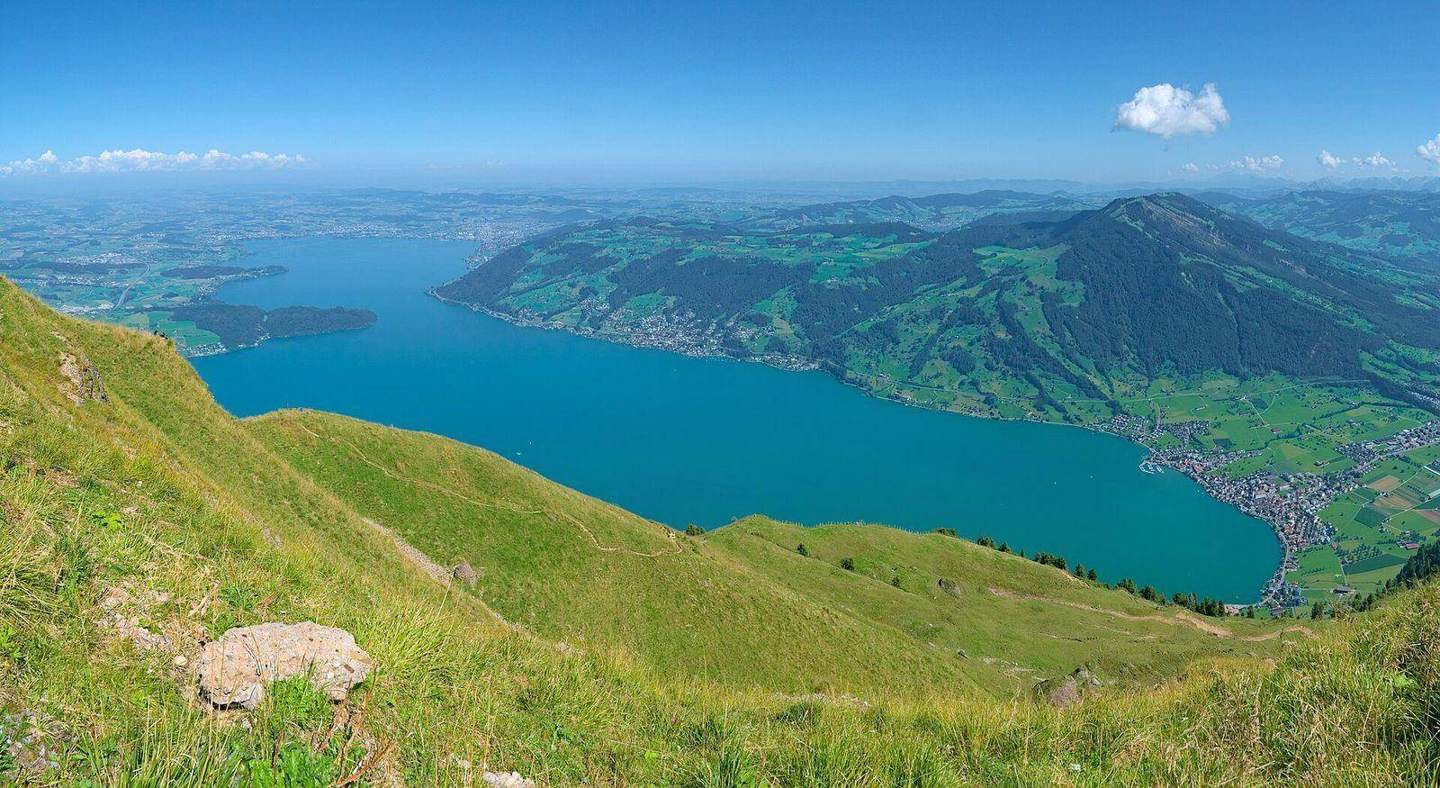
The Rigi, the “queen of the mountains”, stands almost entirely surrounded by water, between Lake Lucerne, Lake Zug and Lake Lauerz. It is reached by the oldest mountain railway in Europe, opened in 1871 from Vitznau, and by a second cogwheel line from Arth-Goldau; a cable car also climbs from Weggis to Rigi Kaltbad. Its slopes are gentle and green, covered with pastures and easy footpaths, and the summit offers a wide panorama over the lakes of central Switzerland and the chain of the Alps. Sunrise on the Rigi has been a ritual since the nineteenth century: Mark Twain described it in A Tramp Abroad. At Rigi Kaltbad a mineral bath designed by Mario Botta looks out over the lake.
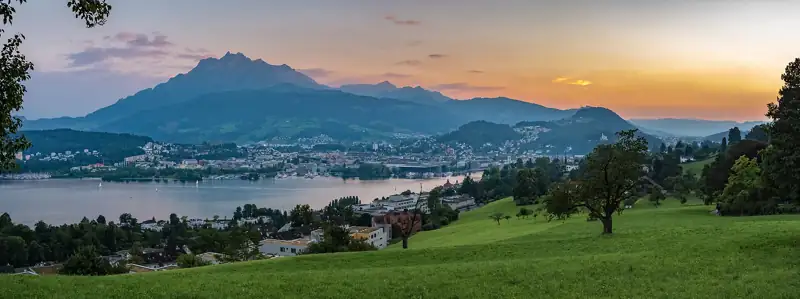
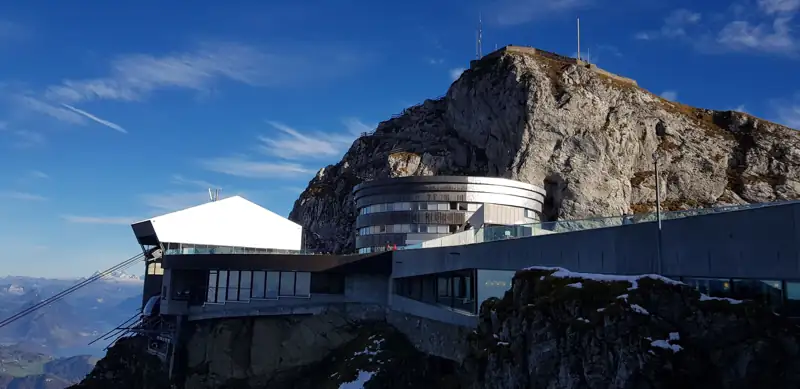
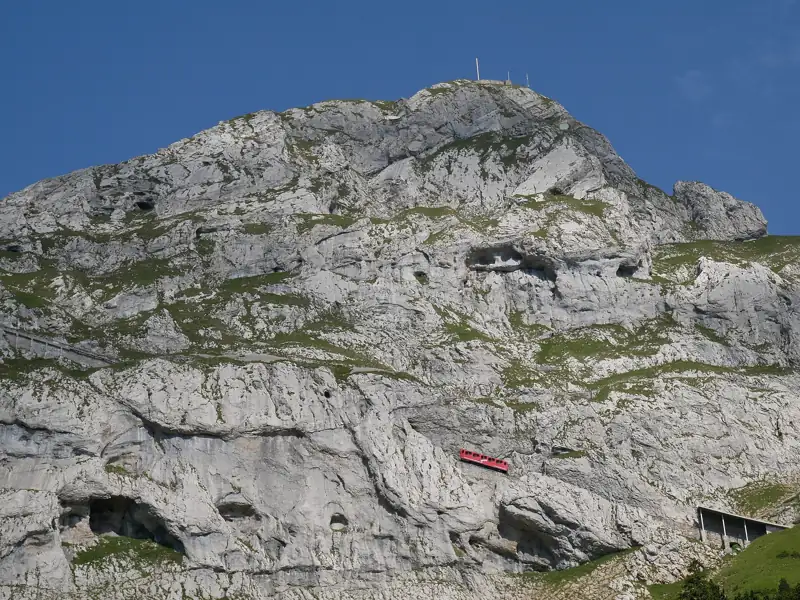
Pilatus is steeper and more dramatic, a mass of rock rising directly above Lucerne, linked by local legend to dragons and to Pontius Pilate. From Alpnachstad the steepest cogwheel railway in the world, opened in 1889, climbs to Pilatus Kulm and its historic hotel; the railway runs in the warmer months, while the cable cars from Kriens operate all year. At the top, short paths lead through rock galleries and to the Esel and Tomlishorn summits.
Boat, train and cable car can be combined in one day, starting and ending in Lucerne: a paddle steamer to Vitznau or Alpnachstad, the climb by rail, the descent by cable car. The Rigi is included in the Swiss Travel Pass. Late spring and early autumn bring clear air and fewer visitors. We can arrange the sequence of boats and trains, a private guide, a table at the summit or a night in one of the mountain hotels to see the sunset and the sunrise.
Gallery