Austria · Villages
Wachau · UNESCO
Dürnstein
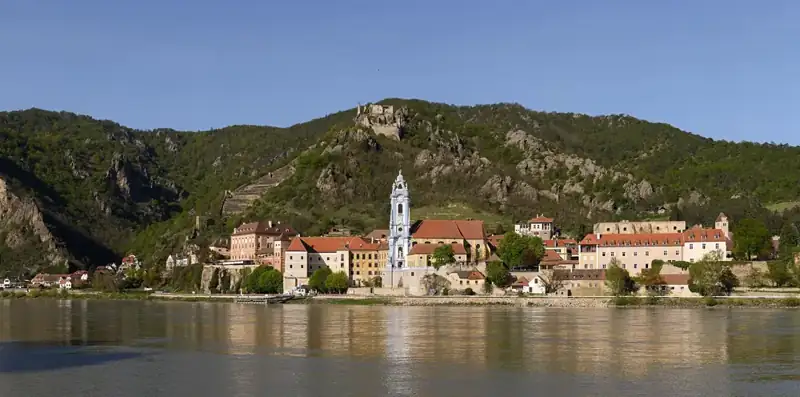
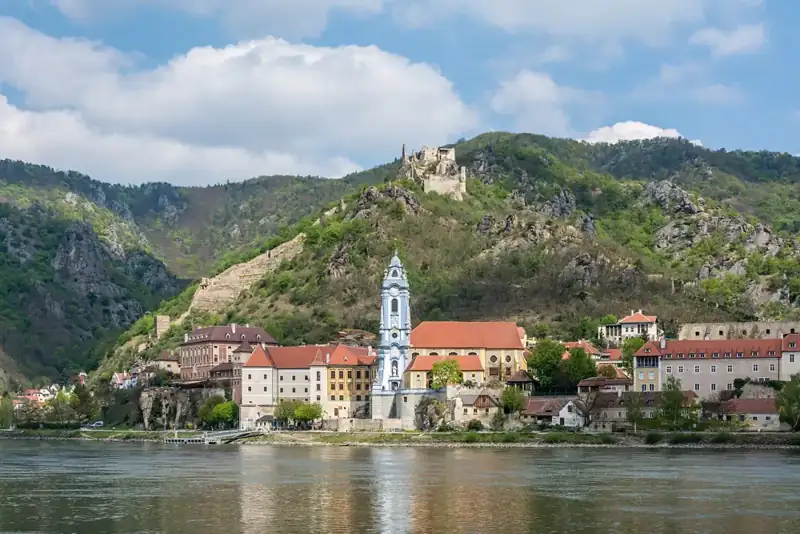
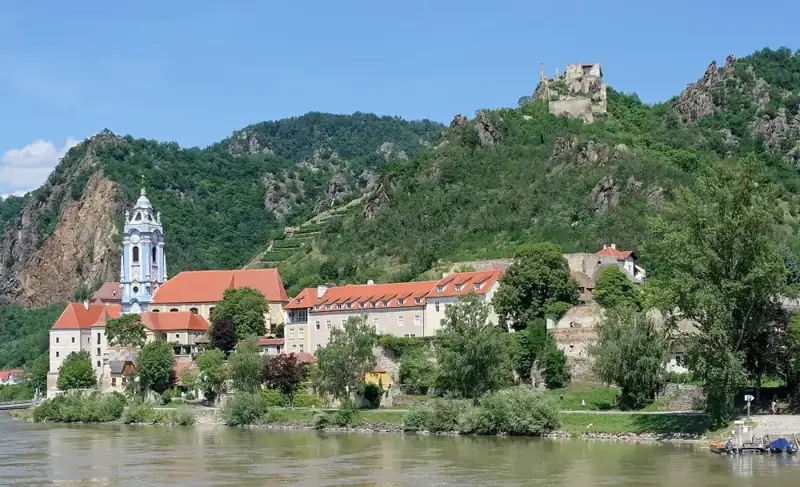
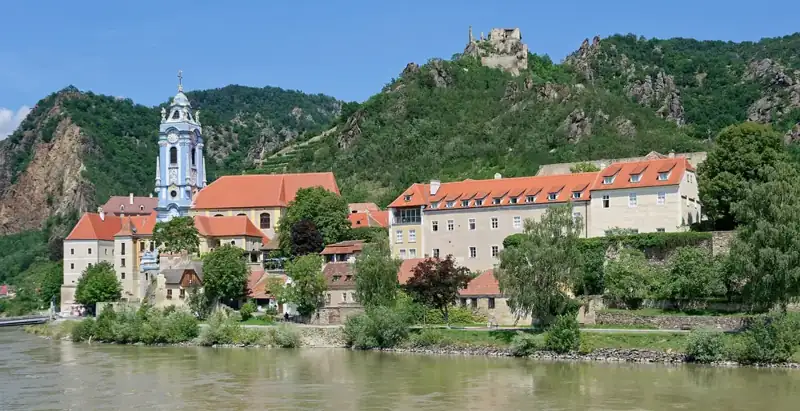
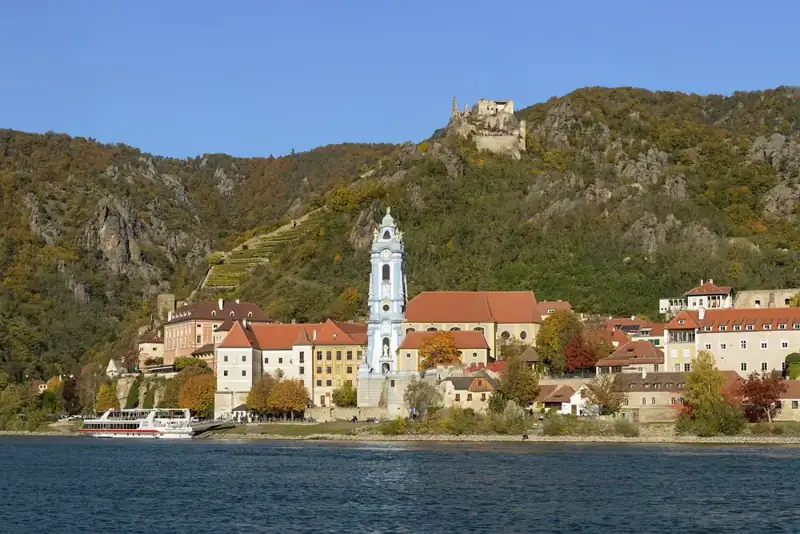
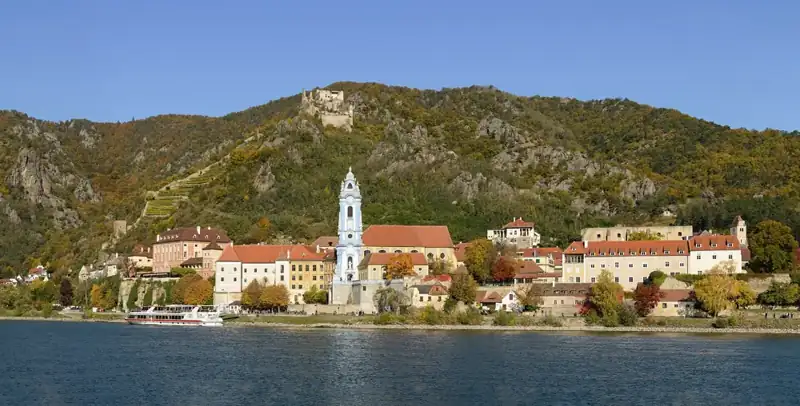
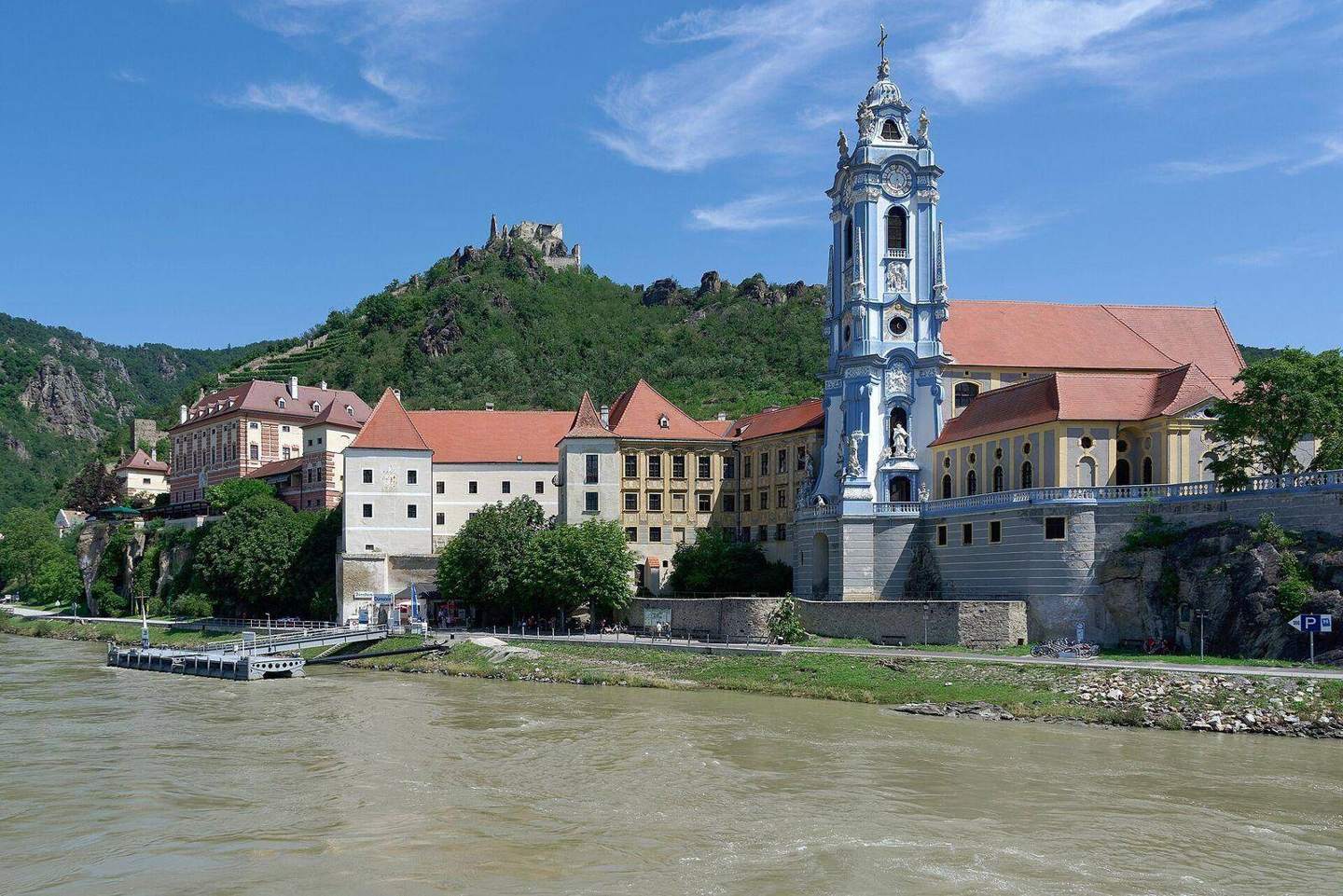
The blue tower of the abbey and the castle ruins where Richard the Lionheart was held.
Wachau · UNESCO
Dürnstein
The blue tower of the abbey and the castle ruins where Richard the Lionheart was held.
Dürnstein, in the Wachau on the Danube, is known for the blue and white tower of its abbey church, which rises from the river bank against terraced vineyards. The village is small, with a main street of old houses, wine taverns and shops selling apricot products from the valley.
Above the town stand the ruins of the castle where Richard the Lionheart was held prisoner on his return from the Crusades in the 12th century, after a quarrel with Duke Leopold V of Austria. A legend tells that his minstrel Blondel found him by singing beneath the walls. A path climbs from the village to the ruins, with views over the river.
The abbey, a former house of Augustinian canons, was rebuilt in the baroque age and its church and cloister can be visited. Around it, terraced vineyards produce Grüner Veltliner and Riesling, some of the finest white wines of Austria.
The village is part of the Wachau, listed by UNESCO, and is pleasant in spring, when the apricot trees bloom, and in autumn, during the harvest. In summer the Danube cycle path and the river boats bring many visitors during the day; evenings are quiet.
The Wachau is one of the best regions in Austria for walking among vineyards. Paths lead from Dürnstein up through the terraces to viewpoints over the river and the villages, and the Welterbesteig, a long-distance path, follows the valley on both banks. The Danube cycle path passes along the river, and boats link Dürnstein with Melk and Krems in the warm season, so the village can be reached by water.
We arrange tastings, boat trips on the Danube and a stay in the Wachau, with visits to Melk Abbey and Krems.
Gallery