Austria · Cities
Styria · UNESCO
Graz
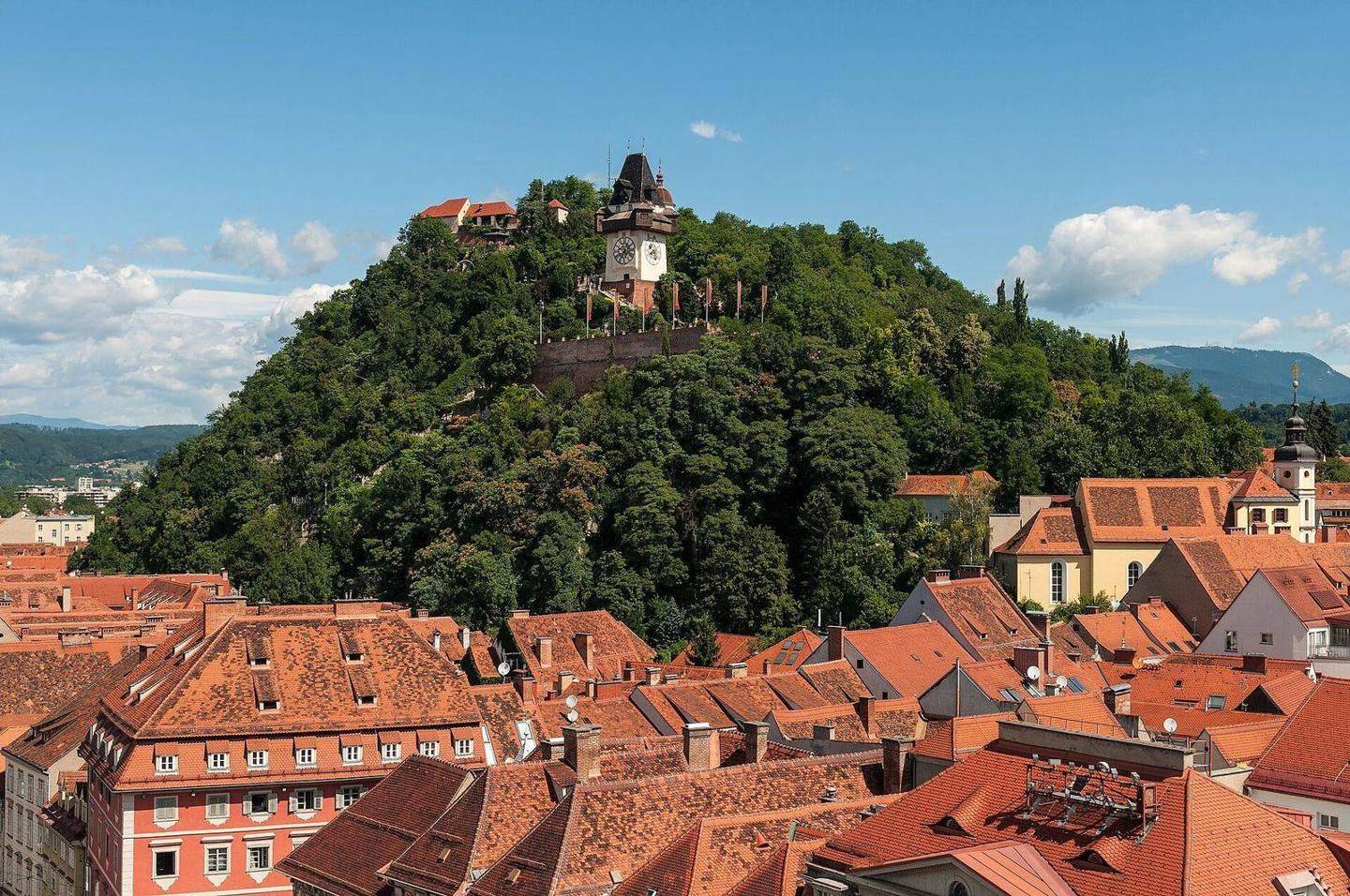
Red roofs, the Schlossberg clock tower and a lively university city.
Styria · UNESCO
Graz
Red roofs, the Schlossberg clock tower and a lively university city.
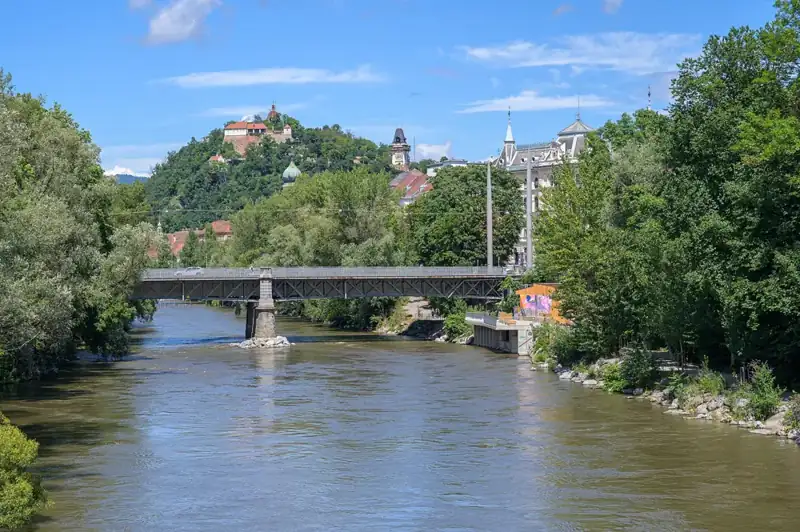
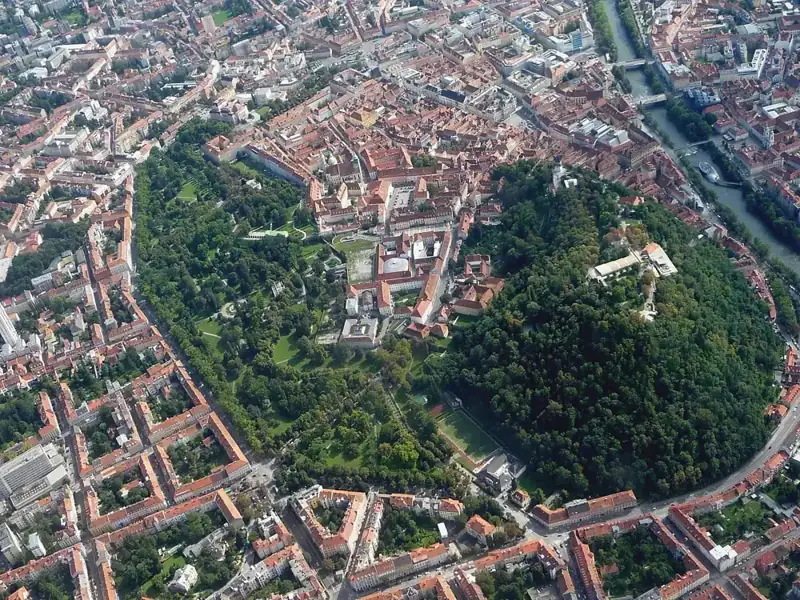
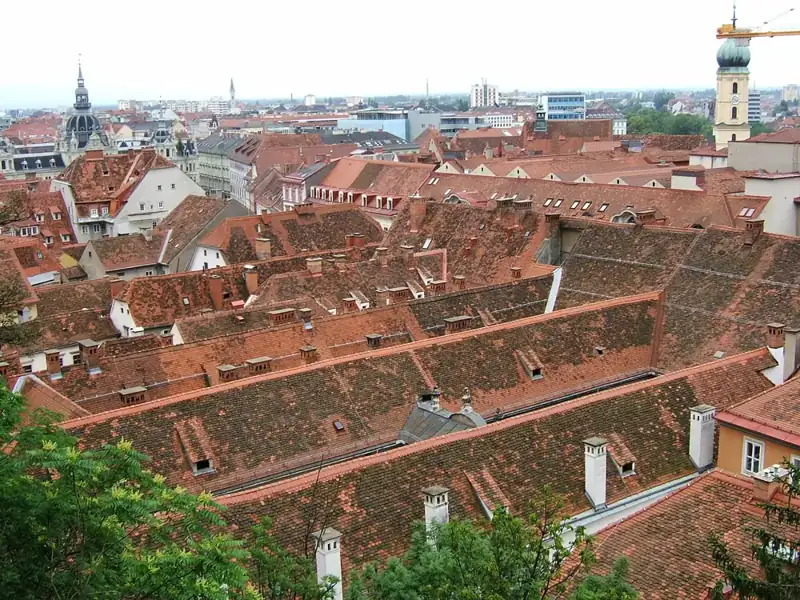
Graz, the capital of Styria and the second city of Austria, has a historic centre and Eggenberg Palace listed by UNESCO. The old town, with red roofs, Renaissance courtyards and baroque churches, lies between the river Mur and the Schlossberg, the wooded hill above the centre.
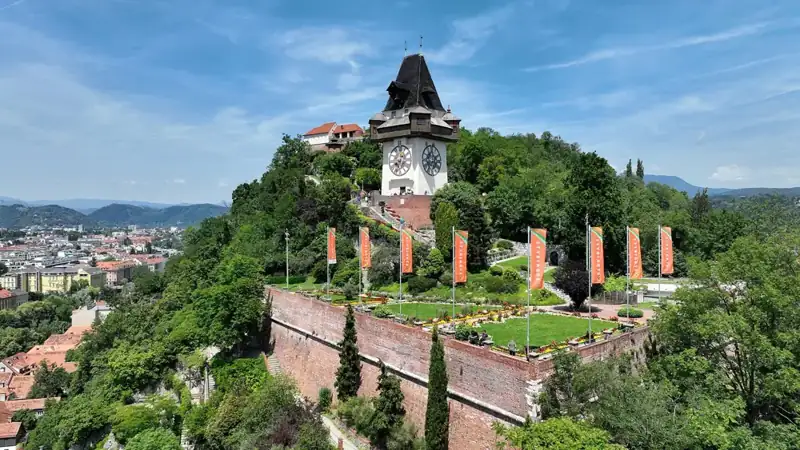
The clock tower on the Schlossberg is the symbol of the city, reached by a funicular, a lift inside the rock or on foot. The Landhaus, with its arcaded Renaissance courtyard, and the Styrian Armoury, which holds thousands of historic weapons and suits of armour, recall the time when Graz defended the empire against the Ottomans. Eggenberg Palace, on the edge of the city, has a baroque layout tied to the calendar and a park with peacocks.
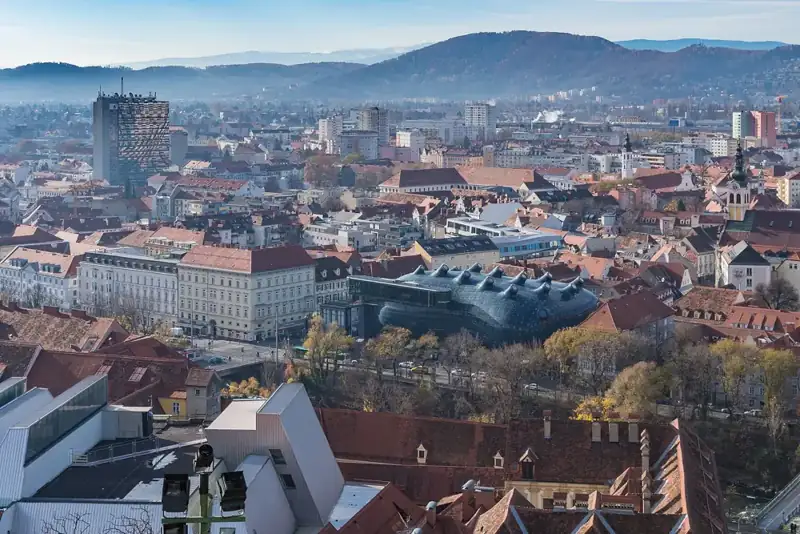
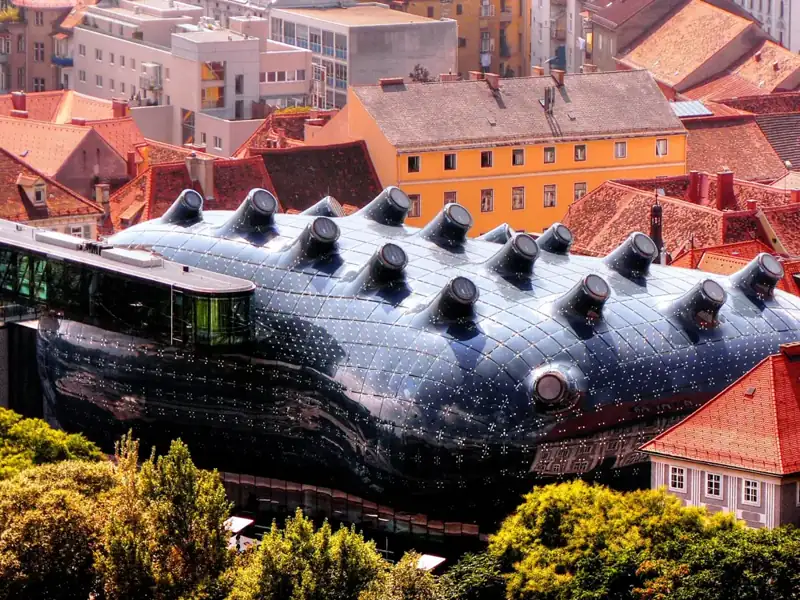
The city also has contemporary architecture such as the Kunsthaus, built when Graz was European Capital of Culture in 2003, and the island in the Mur, a structure of steel and glass on the river. Graz is a UNESCO City of Design and has a large university population that keeps the city young. The Mur divides the old town from the districts on the right bank, which have become a lively area of galleries, shops and restaurants.
Graz has a reputation for food. The farmers’ markets, the restaurants and the wine bars use produce from the Styrian countryside, from pumpkin seed oil to apples and wine. The city is pleasant from spring to autumn, and the harvest season brings new wine and chestnuts.
Graz is the gateway to the Styrian wine roads. We book hotels, guides and tastings, and excursions to the wine country and the thermal baths of eastern Styria.
Gallery